
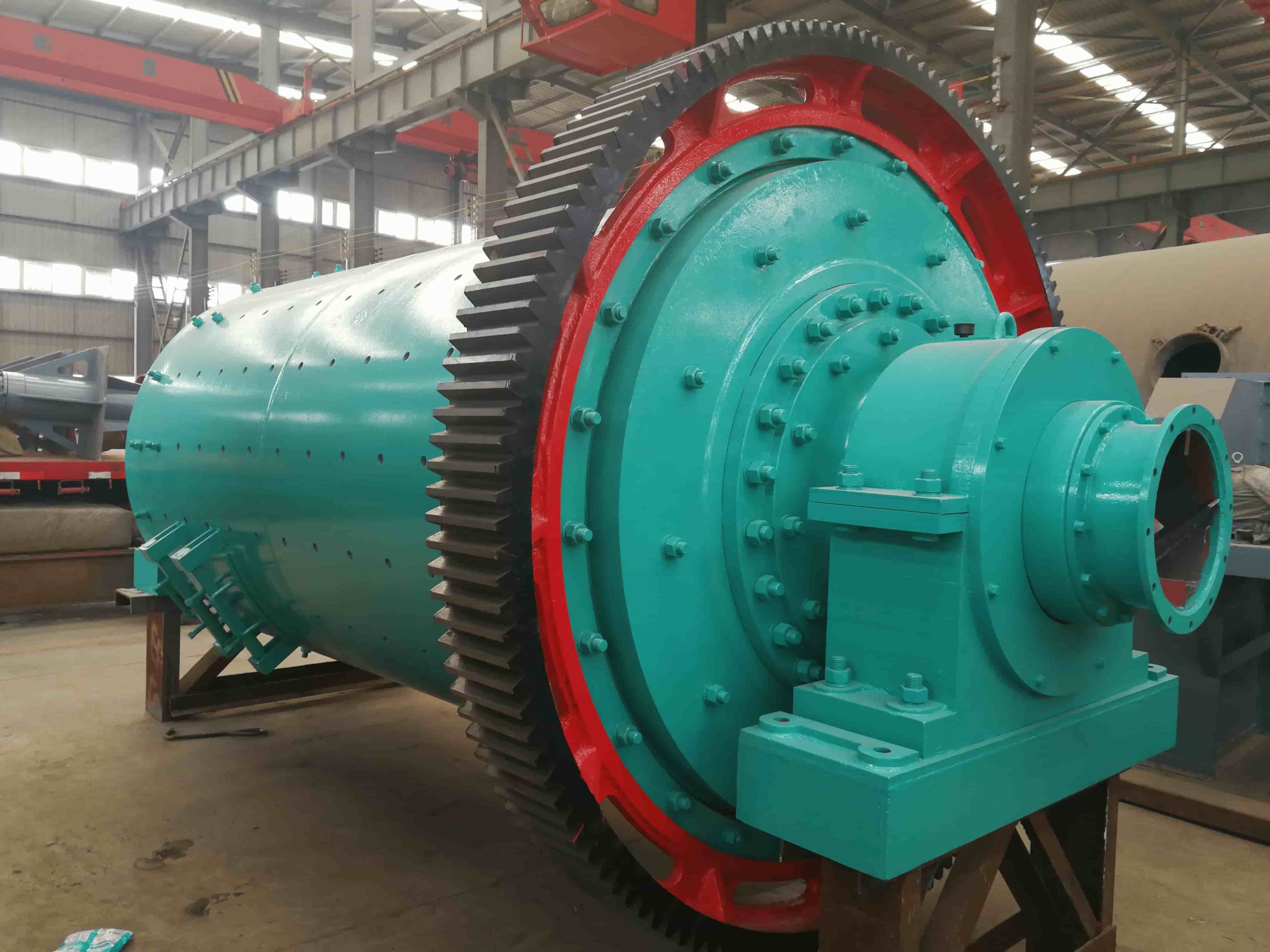
MBS Rod Mill for Coarse Grinding
Ten sizes, from MBS0918 to MBS3245, for coarse grinding where an even product with few fines matters. We supply them to mines and sand plants that use a rod mill ahead of a ball mill, or to make artificial sand from crushed rock.
- Output range0.62–110 t/h
- Motors18.5–800 kW
- Feed sizeup to 25 mm
- Product size0.147–0.833 mm
Figures are indicative. Final parameters are confirmed in the quotation.
Where a rod mill fits in your plant
A rod mill is a coarse-grinding stage. It often feeds a ball mill, or makes sand on its own.
1. Feed to the mill
Crushers and screens bring the material under 25 mm. A feeder gives the mill a steady load.
2. Grinding with rods
Long steel rods tumble in the drum. They touch the material along their length, so the coarse pieces break first and fewer fines are made.
3. Next stage
The product goes to a classifier or screen. It can then feed a ball mill for a finer grind, or go to sand stockpile.
A rod mill gives a more even size than a ball mill at the coarse end. It is not the right tool for a fine product.
Pick a model by the output you need
Output depends on the material, the feed size and the product size. Use this as a starting point.
| Target output | Suggested model | Output range |
|---|---|---|
| up to about 3 t/h | MBS0918 | 0.62–3.2 t/h |
| about 3–5 t/h | MBS1224 | 1.1–4.8 t/h |
| about 5–12 t/h | MBS1530 | 2.8–12 t/h |
| about 12–17 t/h | MBS1830 | 4–17 t/h |
| about 17–26 t/h | MBS2130 | 8–26 t/h |
| about 26–40 t/h | MBS2145 or MBS2430 | 10–45 t/h |
| about 40–65 t/h | MBS2736 | 15–65 t/h |
| about 65–80 t/h | MBS2745 | 20–80 t/h |
| about 80–110 t/h | MBS3245 | 36–110 t/h |
Specifications
All ten models of the MBS series.
| Model | Cylinder Ø × length (mm) | Output (t/h) | Motor (kW) | Approx. weight* |
|---|---|---|---|---|
| MBS0918 | 900 × 1800 | 0.62–3.2 | 18.5–22 | ~5.8 t |
| MBS1224 | 1200 × 2400 | 1.1–4.8 | 30–45 | ~12.3–13.5 t |
| MBS1530 | 1500 × 3000 | 2.8–12 | 75–95 | ~19–21 t |
| MBS1830 | 1830 × 3000 | 4–17 | 110 | ~31.6 t |
| MBS2130 | 2100 × 3000 | 8–26 | 155–180 | ~42–44.5 t |
| MBS2145 | 2100 × 4500 | 10–40 | 210 | ~52.8 t |
| MBS2430 | 2400 × 3000 | 12–45 | 245 | ~68.4 t |
| MBS2736 | 2700 × 3600 | 15–65 | 355–380 | ~89–90 t |
| MBS2745 | 2700 × 4500 | 20–80 | 400 | ~101.7 t |
| MBS3245 | 3200 × 4500 | 36–110 | 630–800 | ~113–128.5 t |
*Approximate weight; final weight and dimensions are confirmed in the quotation. Where a motor or weight range is shown, the value depends on the drive and liner design and is confirmed in the quotation. Figures are indicative; final parameters are confirmed in the quotation.
What decides your real output
The same mill can give very different numbers on two sites. These are the factors we check with you first.
Product size
A rod mill works best at a coarse grind, from about 0.15 to 0.8 mm. Asking for a finer product cuts output sharply, and a ball mill is the better tool.
Feed size and hardness
A finer, softer feed grinds faster. Very large or very hard pieces slow the mill and wear the rods.
Rod charge and speed
The length, diameter and weight of the rod charge and the mill speed set the grinding action. We confirm the recommended charge in the quotation.
Wet or dry grinding
Wet grinding gives higher throughput and no dust. Dry grinding suits materials that must stay dry.
Is a rod mill the right choice?
A short honest check before you ask for a price.
Good fit
- Coarse grinding of iron, copper and gold ores ahead of a ball mill.
- Making artificial sand and other sand-making material from crushed rock.
- Cement raw materials and refractory materials.
- You want an even size with few fines.
Look at other machines if
- You need a fine product: use a ball mill instead.
- You need the highest throughput: a grate ball mill usually gives more per size.
- Feed is coarser than 25 mm: crush it first.
- Rods are a concern: they can bend or break, and need regular top-up.
What operating one is like
What your maintenance team will deal with.
- Rods and liners: the rods and the liners are the main wear parts. Rods wear thinner and need topping up on a schedule. Bent or broken rods must be removed.
- Rod charge: keep the rods the same length and size. A mixed or tangled charge cuts the output.
- Discharge: the product size can be tuned by the rod length, the discharge type and the mill speed.
- Foundation: the mill is heavy. The foundation, the lifting equipment and the power supply need planning early.
- Noise: rod mills are noisy. Plan a guarded area.
What we need to quote
Send what you know on WhatsApp or by email. Rough numbers are enough to start.
- Material and, if known, hardness
- Feed size
- Product size you need
- Output required (t/h)
- Wet or dry grinding
- What follows the mill (ball mill, classifier, sand stockpile)
- Power supply (voltage and frequency)
- Site altitude and destination country
Buying through CNEIG INDUSTRIAL
We are a trading and project-coordination company, not the factory.
- We agree the model and parameters with the manufacturer and write them into your quotation.
- Lead time depends on whether the machine is in stock, has to be produced, or is customised. It is stated in the contract.
- Payment, warranty and delivery terms are set in the contract.
- Read how we handle pre-shipment inspection.
Common questions
What is the difference between a rod mill and a ball mill?
A rod mill uses long steel rods that touch the material along a line. It gives a coarse, even product with few fines. A ball mill uses balls that touch at a point. It grinds finer but makes more fines.
How fine can a rod mill grind?
The product size runs from about 0.15 to 0.8 mm. For finer grinds, we use a ball mill after the rod mill.
How do I choose the size of mill?
Start from your material, the feed size, the product size you need and the output. We then calculate the grinding energy and pick the model. The table above gives a starting point.
What wears out first?
The rods and then the liners. Rods are topped up on a schedule. We can quote a first rod charge and spare liners with the machine.
What about lead time, payment and warranty?
They are agreed in the contract before the order is confirmed. Lead time depends on stock, production or customisation.
Machines used with it
Tell us about your project
Send the material, the feed size and the product size and output you want. We will come back with a suitable model and a quotation.
Request a Quotation
Tell us the material and the output you want. We reply within 1–2 business days.