
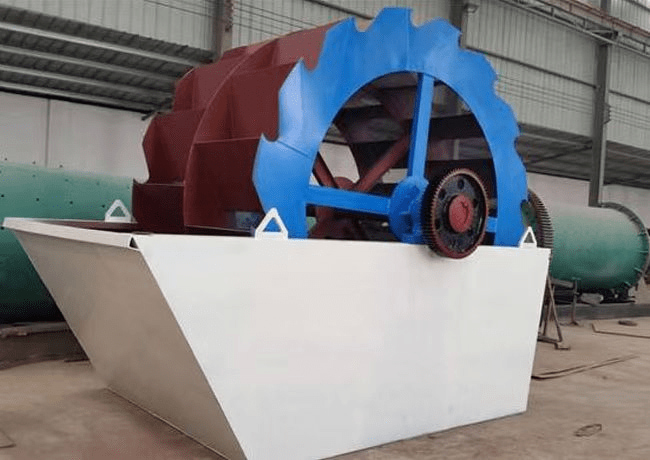
XLD Wheel Sand Washer
A slowly turning bucket wheel lifts washed sand out of a water tank. The washing is gentle, so less fine sand is lost than with a spiral washer. Five models, from 20 to 200 t/h.
- Capacity20–200 t/h
- Wheel diameter2,600–3,600 mm
- Motor5.5–18.5 kW
- Wheel speed1–2.5 r/min
Figures are indicative. Final parameters are confirmed in the quotation.
Where a wheel sand washer fits in your plant
It cleans sand after crushing, sand making or dredging, before the sand is stored or sold.
1. Sand enters the tank
Sand and water go into the tank, where the heavy sand settles and clay and dust float up.
2. The wheel turns
Buckets on the slow wheel lift the sand out of the water and drain it as it rises.
3. Clean sand leaves
The sand drops onto a conveyor or a pile. Dirty water leaves over the weir to settling.
Pick a model by your throughput
Use this as a starting point. Capacity depends on the material and how dirty it is.
| Your feed rate | Suggested model | Capacity |
|---|---|---|
| up to about 50 t/h | XLD2600 | 20–50 t/h |
| about 50–70 t/h | XLD2600II | 30–70 t/h |
| about 70–100 t/h | XLD2800 | 50–100 t/h |
| about 100–120 t/h | XLD3200 | 80–120 t/h |
| about 120–200 t/h | XLD3600 | 120–200 t/h |
Specifications
All five models of the XLD series.
| Model | Wheel diameter (mm) | Wheel speed (r/min) | Capacity (t/h) | Motor (kW) | Overall size L × W × H (mm) | Approx. weight (t) |
|---|---|---|---|---|---|---|
| XLD2600 | 2,600 | 2.5 | 20–50 | 5.5 | 3254 × 2060 × 2622 | ~2.5 |
| XLD2600II | 2,600 | 2.5 | 30–70 | 5.7–7.5 | 3254 × 2260 × 2622 | ~2.9 |
| XLD2800 | 2,800 | 1.2 | 50–100 | 7.5–11 | 3810 × 2820 × 3083 | ~4.0 |
| XLD3200 | 3,200 | 1 | 80–120 | 11–15 | 3810 × 2820 × 3083 | ~7.3 |
| XLD3600 | 3,600 | — | 120–200 | 15–18.5 | 4456 × 2479 × 3688 | ~9.5 |
Approximate weights; final weight and dimensions are confirmed in the quotation. Figures are indicative; final parameters are confirmed in the quotation.
What decides your real result
The same washer can give very different results on two feeds. These are the factors we check with you first.
How much clay and dust
A wheel washer cleans gently. If the clay is heavy or sticky, a spiral washer may do a better job.
Feed size
The washer is made for sand and fine material. Large lumps should be screened out first.
Water supply
The tank needs a steady flow of clean water, and the dirty water needs settling or recycling.
Fine sand you want to keep
The gentle washing keeps more fine sand in the product. Tell us your fineness target.
Is a wheel sand washer the right choice?
A short honest check before you ask for a price.
Good fit
- Natural sand, river sand and crushed sand that need washing.
- Plants that want to keep more fine sand in the product.
- Steady, simple washing with few moving parts.
Look at other machines if
- The feed has a lot of sticky clay: a spiral sand washer cleans harder.
- You have little water and no way to treat or recycle it.
- You have very little floor space: the wheel is large.
What operating one is like
What your operators and maintenance team will deal with.
- Water and settling: dirty water goes to settling ponds or a recovery unit. This is part of the plant design.
- Wheel buckets and bearings: these wear and are replaced in maintenance. We can quote spares with the machine.
- Even feed: a steady feed gives steady washing.
- Moisture of the product: washed sand leaves wet. If you need it drier, plan for dewatering.
What we need to quote
Send what you know on WhatsApp or by email. Rough numbers are enough to start.
- Material (natural sand, crushed sand or other)
- Capacity needed (t/h)
- Feed size and maximum size
- How much clay or dust, if you know
- Water supply you have on site
- Fineness you want to keep in the sand
- Power supply (voltage and frequency)
- Site altitude and destination country
Buying through CNEIG INDUSTRIAL
We are a trading and project-coordination company, not the factory.
- We agree the model and parameters with the manufacturer and write them into your quotation.
- Lead time depends on whether the machine is in stock, has to be produced, or is customised. It is stated in the contract.
- Payment, warranty and delivery terms are set in the contract.
- Read how we handle pre-shipment inspection.
Common questions
Wheel or spiral sand washer: which should I choose?
A wheel washer is gentler and loses less fine sand. A spiral washer cleans harder and suits dirtier feed. Tell us the material and how dirty it is, and we will advise.
Does it lose fine sand?
Less than a spiral washer, but some fine sand still leaves with the overflow. A recovery step after the washer can catch it.
How much water does it need?
It depends on the model and the dirt in your feed. We give the water need in the quotation once we know your material.
Does it take a lot of space?
The wheel is large, so check the overall size in the table against your site. We send a drawing with the quotation.
What about lead time, payment and warranty?
They are agreed in the contract before the order is confirmed. Lead time depends on stock, production or customisation.
Machines used with it
Tell us about your project
Send the material, the capacity and the fineness you want to keep. We will come back with a suitable model and a quotation.
Request a Quotation
Tell us the material and the output you want. We reply within 1–2 business days.