
In many project reviews, the equipment list gets agreed, the layout gets drawn, and the spare parts list arrives later as a spreadsheet tab from the supplier. Someone checks the total against the budget and moves on.
By that point, most of the decisions that decide how badly the plant suffers from a long stoppage have already been made. The spares list can only respond to a design. It cannot fix one.
How many different machines are you buying?
Every additional crusher model, screen type or drive size adds its own set of wear parts, bearings, seals and lubrication components. Take a hypothetical plant with two secondary cone crushers. If they are the same model, one set of liners fits both, one spare bearing set covers both, and a spare assembly held on site protects the whole stage. If they are two different models, even from the same manufacturer, the spares investment nearly doubles and the protection is thinner.
A machine that is slightly better matched to its duty on paper can still be the worse choice for the plant if it adds a new family of parts that nobody else on site uses. The same reasoning applies to screen panels, conveyor belt widths, idler sizes and motor frames. Standardising across the plant does not always give the optimum selection for each position, but it usually gives a plant that is easier to keep running, especially when the nearest supplier is a sea voyage away.
Liner profile deserves a mention here too. Chamber and liner choices determine the wear pattern, and a plant that runs several different liner profiles across similar machines needs to stock each one.
Layout decides how much a failure costs
Two plants can lose the same bearing and have very different weeks. The difference is often in the layout.
Buffer capacity is the first factor. If there is a stockpile or surge bin between the primary and secondary stages, a secondary stoppage of a few hours lets the primary keep working and fills the buffer. Without it, the primary stops within minutes and the whole line is down. The buffer does not repair anything, but it converts a total loss into a partial one, and for short stoppages that can be the largest single saving in the plant. It also costs money, space and a conveyor or two, so it needs to be decided at the layout stage.
Access is the second factor. A crusher that has to be removed from its position to pull a shaft, or that is boxed in by a conveyor gallery with no room for a crane, turns a one-day job into a three-day job. Heavy components like mantles, main shafts and large bearing housings need lifting points, a clear path and a laydown area next to the machine. Drawings that look compact and efficient can hide this. A walkthrough of a liner change on the layout drawing, step by step, with a crane of realistic size and reach, is a cheap way to find the problems.
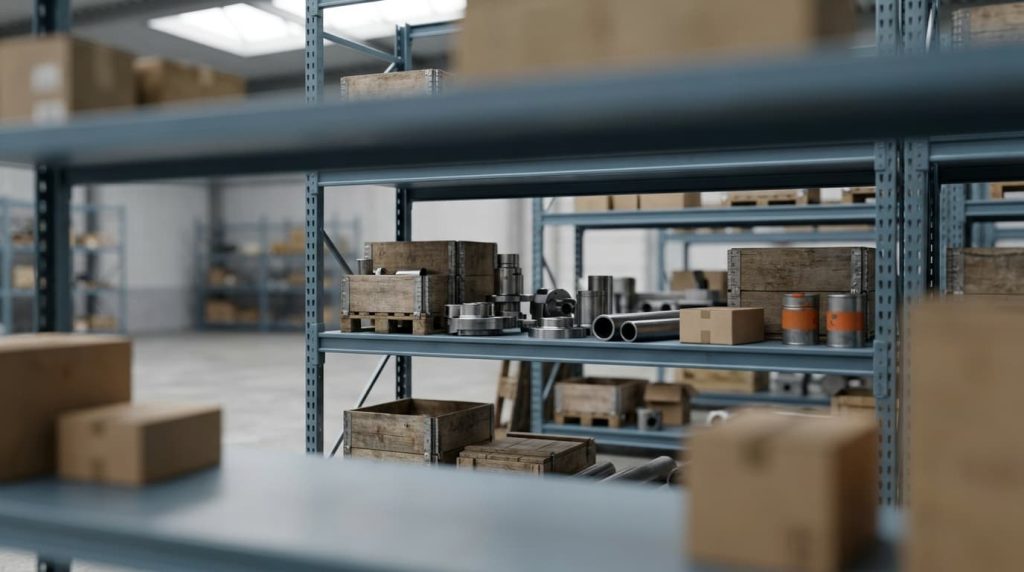
Storage is the third. Spare bearings, seals, hydraulic components and electrical cards should live somewhere dry, clean and close to the plant, with space for a few larger assemblies. If the layout has no place for them, they end up in a container at the far end of the site, or at a distributor in the city.
Where redundancy is cheap
Not everything needs a spare machine, but some things justify one. A second lubrication pump, a standby hydraulic power unit, a spare feeder motor, or an extra set of screen panels costs little next to the output of the plant. A motor frame size shared across several drives means one spare motor protects a number of positions.
The rule that tends to work is to ask of each item how long the line stops if it fails and how long it takes to get a replacement to site. Items that are slow to replace and capable of stopping the whole plant deserve a spare on site, regardless of how rarely they fail. Items that can be replaced locally within a day usually do not. The list worth spending time on is the short one in between.
Lead time belongs in the site data
The delivery time quoted by a supplier is rarely the delivery time that matters. Packing, inland haulage, ocean freight, port handling, customs and the final trip to the site all add up, and a rainy season can close the last stretch of road for days. A spares list built on factory lead times will under-stock the items that matter most.
For this reason the door-to-door lead time to the specific site should be treated like feed characteristics or power supply: a fact collected during design and used in the decisions that follow.
Wear life estimates need the same treatment. Liner life quoted at the quotation stage is usually based on assumed abrasiveness. If testwork on the actual material is available, it should feed into the first-year wear parts forecast. If it is not, the first-year stock should carry a larger margin, and running hours per wear part should be logged from the first set so the forecast can be corrected with real data.
Doing the arithmetic
At the purchase stage, ask the supplier for three lists: commissioning spares, first-year wear parts and critical insurance items. Ask what they hold in stock and how fast it can ship. Ask which parts are common across the machines you are buying. Agree the lists before the order is final, and ship commissioning spares with the equipment.
Then compare what one week of lost production costs against the capital tied up in the insurance items. The answer varies by site, and for a remote project the spare often wins. Record machine models, serial numbers and drawing numbers at commissioning, so that when a part is ordered under pressure it is the right one.
None of this takes much engineering time. It takes someone treating the spares list as part of the design package, in the same meeting as the layout and the flowsheet, and not as an appendix.
If you are planning a crushing line for a remote site and want to compare notes on what to hold on site, how to arrange maintenance access, or where a buffer earns its cost, send us the machine models, shipping route and site access through the Contact page.